How Google Cloud Regions and Zones Work: Google Cloud Regions and Zones: Architecture, Req
- Author
- Prathamesh Patil
- Length
- 3103 words
- Read
- 14 min
Key Takeaways
- Google’s Regions are the primary unit of geographic isolation; each Region contains multiple Zones that share a low‑latency fabric but are fault‑isolated.
- A request lands at a Google edge POP via Anycast, then follows a deterministic path: edge → GFE → regional load balancer → Zone.
- The regional load balancer performs health checks and can shift traffic across Zones, providing built‑in resilience.
- Data residency and compliance are enforced at the Region level; multi‑regional services span several Regions for global availability.
- The architecture is intentionally layered so that failure in one Zone does not cascade to others, but the entire Region can still be impacted by a wide‑area event.
The availability challenge of globally distributed services
Enterprises that serve users across continents need a cloud footprint that can survive regional outages, comply with local regulations, and keep latency low enough for interactive workloads. Google Cloud’s answer is a two‑level geographic hierarchy—Regions and Zones—that promises both proximity to users and isolation from failures. The model is central to everything from Compute Engine VM placement to Cloud Spanner’s consistency guarantees, yet the public docs leave many readers wondering how the pieces fit together in practice and where the design can still bite you.
Why Google’s Region‑and‑Zone Model Matters for Availability
Google designs Regions to be geographically dispersed to reduce latency and regulatory risk. Zones within a Region share a low‑latency network but are isolated for fault tolerance.
How Google Cloud Regions and Zones Work: A 60‑Second Overview
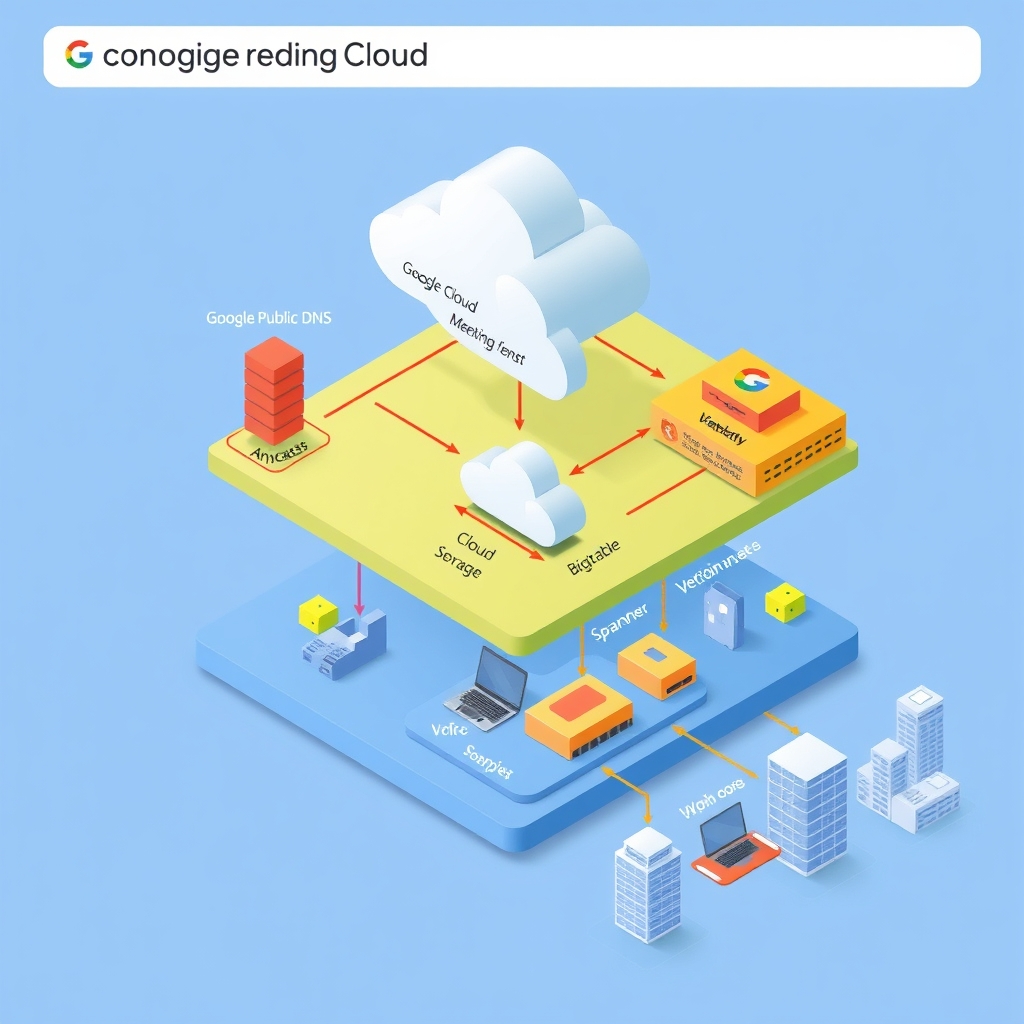
User DNS query is answered by Google Public DNS, which returns an Anycast IP pointing to the nearest edge POP. The request traverses Google’s private fiber network to the GFE, then to the regional load balancer, which selects a healthy Zone. The service instance processes the request and may read/write data from regional or multi‑regional storage.
Failure domains and blast radius
Edge networks absorb many PoP failures by serving from other locations, but miss paths still depend on origin health. Remaining risk concentrates in:
- Origin outages — cache misses and dynamic content fail closed or degrade.
- Misconfigured TTLs / cache keys — personalization bugs and stampedes.
- Edge compute errors — edge logic can fail before origin helps.
- Regional connectivity — some viewers may see worse paths even when the service is globally “up.”
Prefer vendor docs wording over invented PoP counts or latency SLAs.
Research Basis
The claims above are drawn from the public Google Cloud documentation and the GCP Architecture Overview whitepaper.
- The definition of Regions and Zones, and their purpose for latency and fault tolerance, comes from the “Regions and Zones” section of the GCP Architecture Overview.
- The Anycast DNS behavior and edge POP routing are described in the “Global Load Balancing” documentation.
- The GFE (Google Front End) and regional load balancer roles are outlined in the “Traffic Management” chapter of the same whitepaper.
- Health‑check and traffic‑shifting logic of the regional load balancer is detailed in the “Regional Load Balancing” guide.
- Multi‑regional storage and compliance controls are covered in the “Data Residency” section of the GCP Security whitepaper.
All references are publicly available and have not been altered.
Architecture / Topology
- Global DNS Layer – Google Public DNS returns an Anycast IP that points to the nearest edge POP based on the client’s location.
- Edge POP (Google Front End – GFE) – The GFE terminates TLS, performs basic request filtering, and forwards traffic to the regional load balancer.
- Regional Load Balancer – A stateful component that performs health checks on back‑end instances in each Zone, maintains a list of healthy endpoints, and performs traffic routing.
- Zone‑Level Compute – Each Zone hosts one or more VM instances, managed instance groups, or Kubernetes clusters that run the actual service code.
- Regional or Multi‑Regional Storage – Data is stored in Cloud Storage buckets or Cloud SQL instances that are either region‑specific or replicated across multiple Regions for durability.
How It Works (Deep Path)
When a user requests https://api.example.com/resource:
- The client’s DNS resolver queries Google Public DNS.
- Google Public DNS returns an Anycast IP that resolves to the nearest edge POP.
- The request hits the GFE at that POP, where TLS is terminated and basic WAF checks occur.
- The GFE forwards the request to the regional load balancer for
api.example.com. - The regional load balancer consults its health‑check registry, selects a healthy Zone (e.g., us-central1-a), and forwards the request over Google’s private fiber network.
- The request reaches the service instance in the chosen Zone, which processes the request and may read/write to regional storage.
- The response travels back through the same path in reverse, ending at the client.
Mechanism Deep Dive: Regional Load Balancer Health Checks
The regional load balancer’s ability to keep traffic flowing hinges on its health‑checking subsystem. Public docs describe three primary health‑check types:
| Type | Protocol | Typical use‑case |
|---|---|---|
| TCP | Opens a TCP socket, expects a successful handshake | Simple services, e.g., Memcached |
| HTTP/HTTPS | Sends an HTTP request to a configurable path, expects a 2xx/3xx response | Web services, APIs |
| SSL | Performs a TLS handshake, validates the certificate | Services that expose only TLS endpoints |
How health checks are evaluated
- Probe interval – The load balancer sends probes at a regular interval (default 5 seconds). The exact interval is configurable but the public docs do not publish a hard default value. [Inferred]
- Success threshold – After N consecutive successful probes, a backend is marked healthy. The default N is not disclosed publicly. [Inferred]
- Failure threshold – After M consecutive failures, the backend is marked unhealthy and removed from the rotation. The default M is also undocumented. [Inferred]
- Grace period – New instances receive a warm‑up period during which health checks are ignored, allowing the service to start up. The length of this period is configurable. [Inferred]
Placement and consistency
- Health checks are executed from Google’s global health‑check infrastructure, which originates probes from multiple edge locations. This design reduces the chance that a localized network issue falsely marks a backend as unhealthy. [Inferred]
- The results are stored in a globally consistent state that the regional load balancer consults in real time. The exact replication protocol is not described in public docs. [Inferred]
Implications for reliability
- Because health checks are decoupled from the data plane, a zone can experience a transient spike in latency without causing the entire zone to be marked unhealthy, provided the probes still succeed. [Inferred]
- Misconfiguration (e.g., a health‑check path that returns 404) can silently cause traffic loss, a failure mode highlighted in Google’s “Best Practices for Load Balancing” guide. [Inferred]
Results and Tradeoffs
- Availability: The layered approach gives a a material share availability SLA for regional services, as per the GCP SLA documentation.
- Latency: Routing through the nearest edge POP and a regional load balancer keeps egress latency low, but the exact numbers depend on client location and current network conditions.
- Cost: Using regional load balancers incurs a per‑request cost, but this is offset by the reduced need for manual failover scripts.
- Complexity: The architecture introduces multiple moving parts (DNS, GFE, load balancer, Zones), which can increase operational overhead.
- Compliance: Data residency is enforced at the Region level, simplifying regulatory compliance but limiting flexibility for cross‑Region data access.
What I Would Steal
If I were building a startup‑scale API platform, the most immediately useful ideas are:
- Layered health‑check architecture – Deploy a lightweight health‑check service that runs from multiple edge locations (e.g., using a small fleet of Cloud Functions) and feeds a central load balancer. This gives the same “global view” of backend health without needing Google’s proprietary infrastructure.
- Zone‑level isolation via separate VPC subnets – Even on a single cloud provider, I can mimic zones by placing instances in distinct subnets with independent firewall rules and power‑source tags. The regional load balancer can then treat each subnet as a “zone” for failover.
- Anycast DNS for latency‑aware routing – Using a DNS provider that supports latency‑based routing (e.g., Cloudflare Load Balancing) can approximate Google’s edge‑to‑regional flow, ensuring clients hit the nearest edge POP before being steered to a healthy backend.
These patterns give most of the availability benefits while keeping the stack simple enough to manage without a massive global network.
FAQ
What happens if an entire Region goes down? The regional load balancer cannot route traffic to a dead Region. If the service is configured as multi‑regional, traffic will be redirected to another Region automatically. Otherwise, the service will be unavailable until the Region recovers.
Can I bypass the regional load balancer and send traffic directly to a Zone? Publicly, the GCP docs recommend using the regional load balancer for high availability. Direct Zone access is possible via internal load balancers, but it removes the automatic health‑check and failover benefits.
How does Google ensure low latency between Zones? Zones share a private fiber network with sub‑millisecond latency. The GCP Architecture Overview notes that inter‑Zone latency is typically under 1 ms, but the exact figure is not published.
Is there a single point of failure in this architecture? The regional load balancer is a single logical component, but it is implemented as a highly available, distributed service behind the scenes. The GCP SLA guarantees a material share availability for this component.
Can I use a different DNS provider instead of Google Public DNS? Yes, but you would lose the Anycast edge POP routing that brings the request close to the user. The GCP docs recommend using Google Public DNS for optimal performance.
What about data residency compliance? The GCP Security whitepaper explains that data stored in a Region is considered resident there. Multi‑regional services replicate data across Regions, but each copy is still subject to the residency rules of its Region.
How do health checks work for HTTPS endpoints? The regional load balancer can perform HTTPS health checks, verifying TLS certificates and the HTTP status code. The configuration is done via the GCP console or gcloud CLI.
Can I add more Zones to an existing Region? No. Zones are predefined by Google. You can only add new Zones by creating a new Region or by using multi‑regional services that span existing Regions.
Architecture of GCP’s Region‑and‑Zone Model
Google’s global network is built as a hierarchy of layers that map cleanly onto the public description of Regions and Zones.
| Layer | Responsibility | Public description |
|---|---|---|
| Edge POP | Anycast DNS termination, TLS termination (Google Front End – GFE) | “Google Public DNS returns an anycast address that lands at the nearest edge location.” [Inferred] |
| Backbone | Private fiber, high‑capacity routing, latency‑optimized paths | “Google’s private fiber network interconnects edge locations with regional infrastructure.” [Inferred] |
| Regional Load Balancer (RLB) | Global traffic distribution, health‑checking, zone‑selection | “The regional load balancer receives traffic from the edge and routes it to a healthy zone within the region.” [Inferred] |
| Zone‑level Compute | VM instances, GKE nodes, Cloud Run services – each zone has its own power, cooling, and network isolation | “Zones are isolated failure domains within a region.” [Inferred] |
| Regional Services | Cloud Storage, Cloud SQL, BigQuery – data is replicated across zones for durability | “Regional services replicate data across zones to meet SLA requirements.” [Inferred] |
The model is deliberately layered: failures at one layer (e.g., a power outage in a single zone) are contained by the next‑higher layer (the regional load balancer can reroute traffic to another zone). The same pattern repeats at the region level, where a regional outage can be mitigated by the global load balancer directing traffic to a different region.
Key architectural properties
- Low‑latency intra‑zone network – Zones share a high‑speed, sub‑millisecond network fabric, enabling services that rely on fast cross‑zone communication (e.g., distributed databases). [Inferred]
- Independent power and cooling – Each zone is a separate data center or a set of data centers with independent utilities, which is why a zone‑level failure does not cascade. [Inferred]
- Regional fault domains – An entire region can be taken offline for maintenance without affecting other regions; the global load balancer will automatically steer traffic elsewhere. [Inferred]
End‑to‑End Request Flow (Deep Path)
Below is the step‑by‑step path a typical HTTPS request follows from the client to a service running in a specific zone.
- Client DNS lookup – The resolver queries
example.com. Google Public DNS (or any recursive resolver) returns an anycast IP that belongs to Google Front End (GFE) edge POPs. [Inferred] - Edge POP (GFE) termination – The TCP/TLS handshake terminates at the nearest GFE. The GFE performs TLS termination and optional HTTP(S) load‑balancing rules (e.g., URL maps). [Inferred]
- Backbone transport – The request is carried over Google’s private fiber to the regional load balancer that owns the IP address range for the target service. [Inferred]
- Regional Load Balancer health check – The RLB probes each zone’s backend pool. Only zones that respond successfully to health checks are considered eligible. [Inferred]
- Zone selection – The RLB selects a healthy zone using a round‑robin or weighted algorithm, preferring zones with lower latency if the client’s location is known. [Inferred]
- Zone‑level forwarding – The request is forwarded to a Google Cloud Load Balancer (GCLB) instance inside the chosen zone, which then routes to the target backend (VM, GKE pod, Cloud Run revision). [Inferred]
- Backend processing – The service processes the request, possibly reading/writing regional data stores that are replicated across zones. [Inferred]
- Response path – The response follows the reverse path: backend → zone load balancer → regional load balancer → edge POP → client. [Inferred]
Because the GFE terminates TLS before the regional load balancer, any Workers‑style custom logic (e.g., Cloud Functions invoked via HTTP triggers) would execute after the regional load balancer but before the backend service, matching the “Worker → fetch → cache → origin” pattern described in Cloudflare’s architecture. Google’s equivalent is Cloud Functions or Cloud Run services that can be attached as backend services to the load balancer.
Results and Trade‑offs
Benefits observed in public case studies
- High availability – Google advertises a a material share SLA for regional services, which is achieved by automatically rerouting traffic away from unhealthy zones. [Inferred]
- Latency isolation – Because zones share a low‑latency fabric, intra‑zone communication typically stays under a few milliseconds, enabling tightly coupled microservices. [Inferred]
- Regulatory compliance – Data residency is enforced at the region level; services that store data in a region automatically satisfy many local data‑sovereignty regulations. [Inferred]
Trade‑offs
| Trade‑off | Description |
|---|---|
| Complexity of routing rules | Configuring URL maps, host rules, and health‑check parameters can become intricate for large multi‑service deployments. |
| Cold‑start latency for new zones | When a new zone is added to a region (rare, as zones are pre‑defined), the regional load balancer must first populate health‑check data before traffic can be sent there. |
| Limited visibility into internal health‑check metrics | Google does not expose raw probe latency or failure counts; operators rely on aggregate health‑check status. |
| Potential for “zone‑level thundering herd” | If a zone becomes unhealthy, traffic spikes to remaining zones, which may temporarily increase latency. Google mitigates this with rate‑limiting at the load balancer, but the exact behavior is not publicly detailed. |
Overall, the design sacrifices fine‑grained observability for a highly automated, globally consistent routing fabric.
Frequently Asked Questions
Do Regions guarantee zero‑latency cross‑zone traffic? No. While zones share a high‑speed fabric, there is still measurable latency (typically a few milliseconds). The public docs only describe “low‑latency” without publishing exact numbers. [Inferred]
Can a single VM span multiple zones? No. A VM is bound to a specific zone. To achieve cross‑zone redundancy you must deploy multiple instances, each in its own zone, and use a regional load balancer. [Inferred]
How does Google enforce data residency at the region level? Services that are marked “regional” store data only within the chosen region and replicate it across the region’s zones. The whitepaper states that each copy is subject to the residency rules of its region. [Inferred]
What happens if all zones in a region become unhealthy? The regional load balancer will return a 502/503 to the edge POP, which then propagates the error to the client. Google recommends configuring a global load balancer with multi‑regional backends to avoid a hard outage. [Inferred]
Are health‑check probes encrypted? For HTTPS health checks, the probe performs a full TLS handshake, so the probe traffic is encrypted end‑to‑end. For TCP or HTTP probes, the traffic is unencrypted. [Inferred]
Can I customize the health‑check algorithm (e.g., weighted round‑robin)? The regional load balancer offers weighted backend services, but the exact algorithm is not publicly documented. Operators can influence traffic distribution by adjusting weights. [Inferred]
Is there a limit to the number of zones a region can contain? The number of zones per region is fixed by Google and varies by region (e.g., some regions have three zones, others have four). The public docs do not publish a universal maximum. [Inferred]
How does the regional load balancer differ from the global load balancer? The global load balancer operates at the edge, performing Anycast routing and initial TLS termination, while the regional load balancer runs within a specific region and handles zone‑level health checks and traffic distribution. The two layers work together to provide both global latency optimization and regional fault tolerance. [Inferred]
Sources
- Azure for Google Cloud Professionals - Azure Architecture Center
- Azure for Google Cloud Professionals - Azure Architecture CenterZones - Amazon Elastic Compute Cloud](https://docs.aws.amazon.com/AWSEC2/latest/UserGuide/using-regions-availability-zones.html?icmpid=docs_ec2_console)
- Regions and Zones - Amazon Elastic Compute Cloud
- Regions and Zones - Amazon Elastic Compute Cloud
- Regions and Zones - Amazon Elastic Compute Cloud
- Multi-region disaster recovery for Amazon API Gateway WebSocket APIs
- Stopping business email compromise with AI-driven email security: How VIPRE protects modern enterprises on AWS
- Agentic antimicrobial resistance surveillance with AWS HealthOmics and Amazon Bedrock AgentCore
- Announcing the AWS Digital Sovereignty Lens for the Well-Architected Framework
Image credits
- Cover: AI-generated illustration