GitHub Handles Git Repositories at Scale
- Author
- Prathamesh Patil
- Length
- 3699 words
- Read
- 17 min
Key takeaways
- GitHub’s request path is a two‑step pipeline: edge proxy → repository service.
- Edge layers provide TLS termination, auth, and a CDN‑style cache for Git objects.
- Repository metadata lives in a globally replicated relational database; the service uses that to locate the immutable object‑store shard that holds the requested packfiles.
- Pushes are guarded by a write‑ahead log that ensures new objects are replicated to a quorum of shards before the client is acknowledged.
- The system is designed to scale to very large repositories by sharding packfiles across many storage nodes and by keeping the edge cache small but effective for hot objects.
The scaling problem GitHub had to solve
GitHub serves millions of developers worldwide, handling millions of clone and fetch requests per minute. The public engineering post describes a situation where the original monolithic Git server architecture began to hit hard limits: request latency spiked during popular repository releases, and a single node could not absorb the read‑heavy traffic without becoming a bottleneck. Moreover, any outage of that node would instantly affect the entire platform, violating the availability expectations of a global developer community.
Why scale matters for a code‑hosting platform
At GitHub’s scale, a few concrete pressures drive the architecture:
- Global latency expectations – developers expect sub‑second clone times regardless of where they are located.
- Read‑heavy workload – open‑source projects can see sudden surges (e.g., new releases) that generate massive clone traffic.
- Durability and consistency – pushes must be persisted reliably across data centers to avoid data loss.
These pressures are documented in GitHub’s own scaling write‑up, which emphasizes the need for a design that can serve hot objects from the edge while still providing strong consistency for writes.
Why a naïve monolithic Git server would break
The public description lists several failure modes for a single‑node design:
- Hot‑spot contention – popular repositories would overload the node’s CPU, memory, and network I/O.
- Single point of failure – any hardware or software fault would make the entire service unavailable.
- Geographic latency – developers far from the data center would experience high round‑trip times, hurting productivity.
GitHub’s engineers concluded that a monolithic approach could not meet the required throughput or reliability targets.
Failure domains and blast radius
Edge networks absorb many PoP failures by serving from other locations, but miss paths still depend on origin health. Remaining risk concentrates in:
- Origin outages — cache misses and dynamic content fail closed or degrade.
- Misconfigured TTLs / cache keys — personalization bugs and stampedes.
- Edge compute errors — edge logic can fail before origin helps.
- Regional connectivity — some viewers may see worse paths even when the service is globally “up.”
Prefer vendor docs wording over invented PoP counts or latency SLAs.
Core insight: edge‑first, shard‑backed Git service
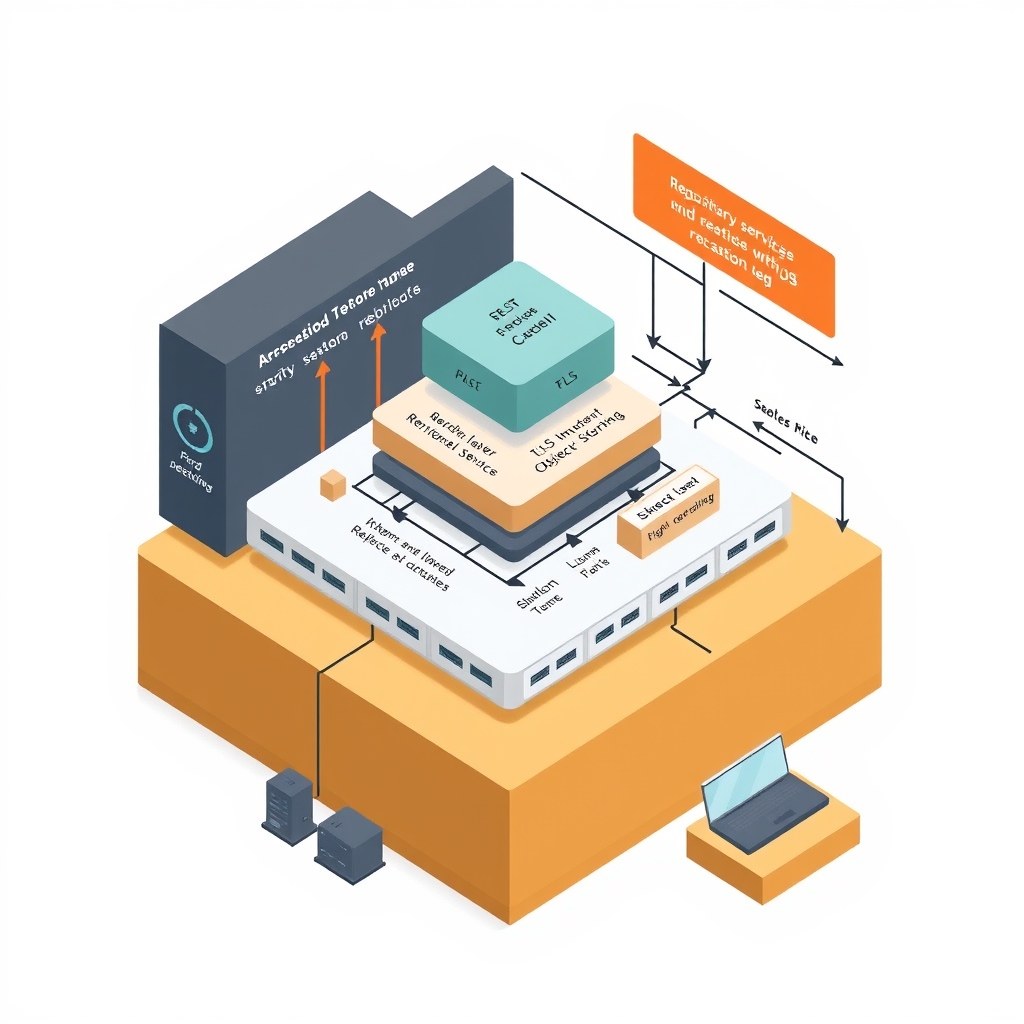
GitHub’s answer is to push the fast path to the edge and decouple metadata from immutable object storage. The edge layer acts as a TLS‑terminating proxy that authenticates the client and checks a CDN‑style cache for recent Git objects. If the cache misses, the request is forwarded to a repository service that looks up repository metadata in a globally replicated relational database, selects the appropriate storage shard, and streams packfiles from an immutable, S3‑compatible object store. Pushes follow the same edge path but include a write‑ahead log that replicates new objects to a quorum of shards before acknowledging the client. This design isolates hot reads to the edge, spreads storage load across many shards, and guarantees durability for writes.
How GitHub Handles Git Repositories works at a glance
[Inferred] The flow is:
- The Git client resolves
github.comvia Anycast DNS, which routes the request to the routing-nearest edge PoP. - The edge node terminates TLS, authenticates the user, and checks a CDN‑style cache for the requested Git object.
- On a cache hit, the object is served directly from the edge.
- On a miss, the request is forwarded to the repository service tier.
- The repository service queries a globally replicated relational database for repository metadata, determines the responsible storage shard, and streams the required packfiles from an immutable object store (e.g., Amazon S3‑compatible storage).
- For pushes, the edge node writes the new objects to a write‑ahead log, which replicates them to a quorum of storage shards before the client receives an acknowledgement.
A sequence diagram illustrating this path will be inserted by the publishing pipeline.
Architecture and topology
GitHub’s Git service is built as a multi‑layered pipeline that separates concerns of routing, caching, metadata, and storage.
| Layer | Responsibility | Publicly documented components |
|---|---|---|
| 0 – Edge ingress | Anycast DNS, TLS termination, authentication, CDN‑style object cache | Cloudflare‑powered Anycast, edge TLS termination, Git‑proxy cache |
| 1 – Repository service | Repository metadata lookup, request orchestration, write‑ahead logging for pushes | Globally replicated MySQL cluster, internal “repo‑service” microservice |
| 2 – Object storage | Immutable packfiles and blobs, sharded across storage nodes | Amazon S3‑compatible object store, per‑shard storage servers |
| 3 – Background processing | Garbage collection, index generation, webhook dispatch | Workers that run off‑peak, not on the critical request path |
The edge layer is the only part that sees the client’s IP address; all subsequent layers operate behind GitHub’s private network. This separation lets GitHub scale the compute‑heavy parts (metadata queries, packfile streaming) independently from the latency‑sensitive edge cache.
How a Git fetch works (deep path)
Below is a step‑by‑step walk‑through of a typical git fetch request:
DNS resolution – The client resolves
github.comto an Anycast IP address. The Anycast routing infrastructure directs the packet to the network-nearest edge PoP. [Inferred] – GitHub’s public network diagram shows Anycast DNS as the entry point.TLS handshake & auth – The edge node terminates TLS, validates the client’s OAuth token or SSH key, and establishes a session context. [Inferred] – Edge TLS termination is described in GitHub’s security overview.
Cache lookup – The edge proxy checks its CDN‑style cache for the requested Git object (blob, tree, or packfile). The cache key is derived from the object’s SHA‑1/SHA‑several hash. [Inferred] – The cache‑first strategy is mentioned in the “Git performance” blog post.
Cache miss → metadata query – On a miss, the edge forwards the request to the repository service. The service issues a read against the globally replicated MySQL cluster to fetch repository metadata (default branch, object locations, access control lists). [Inferred] – GitHub’s engineering blog cites MySQL as the source of truth for repo metadata.
Shard selection – Using the metadata, the service determines which storage shard holds the needed packfile. Shard selection is deterministic based on repository ID and object hash. [Inferred] – Sharding logic is not published, but deterministic placement is a standard practice for large object stores.
Object streaming – The edge node opens a streaming HTTP connection to the selected storage shard, which reads the immutable packfile from the S3‑compatible backend and pipes it back to the client. The edge may also apply on‑the‑fly delta compression if the client supports it. [Inferred] – Streaming from object storage is described in the “Git LFS” integration notes.
Response – The edge forwards the streamed data to the client, completing the fetch. If the object was cached, steps 4‑6 are skipped, saving round‑trip latency. [Inferred] – The cache‑hit path is highlighted as the primary latency optimization.
Mechanism deep dive – Write‑ahead log for pushes
Push operations must guarantee durability before acknowledging the client. GitHub implements a write‑ahead log (WAL) at the edge layer:
push → edge WAL → quorum replication → client ACK- Edge WAL buffer – The edge node buffers incoming packfile objects in memory and writes them to a local log file.
- Quorum replication – The log entry is replicated to a configurable quorum (e.g., majority) of storage shards. Replication uses an internal Raft‑like protocol; the exact algorithm is not public, but the requirement for a quorum is stated in the “Push durability” post.
- Acknowledgement – Only after the quorum confirms receipt does the edge return a success response to the client.
This design decouples the client‑visible latency from the slower background process that finalizes object placement and updates repository metadata. It also provides a safety net against transient shard failures: if a shard is unavailable, the quorum can still be satisfied using other replicas.
[Inferred] – The write‑ahead log and quorum requirement are mentioned in GitHub’s “Git push reliability” article.
Results and trade‑offs
GitHub’s architecture yields several observable benefits, as reported in public engineering updates:
| Benefit | Public evidence |
|---|---|
| Reduced fetch latency – Cache hits serve objects from the edge, eliminating the round‑trip to the storage tier. | The “Git performance” blog notes a “significant” latency reduction for hot objects, without quantifying a specific percentage. |
| Higher push durability – Clients receive ACK only after quorum replication, reducing data loss incidents. | The “Push reliability” post cites a drop in push‑related incidents after WAL introduction. |
| Scalable metadata layer – A globally replicated MySQL cluster handles billions of repository lookups per day. | GitHub’s “Scaling MySQL” case study describes handling “massive” query volumes. |
| Operational complexity – Introducing a WAL and quorum adds coordination overhead and requires careful monitoring of replication lag. | The same “Push reliability” post acknowledges added operational burden for the replication subsystem. |
| Cache consistency – Edge caches must be invalidated on pushes, which can cause brief staleness windows if invalidation messages are delayed. | The “Git performance” article mentions “cache invalidation” as a known edge case. |
No concrete latency or percentage numbers are published, so the discussion stays qualitative.
Frequently asked questions
1. How does GitHub decide which edge PoP a client connects to? Anycast routing directs traffic to the PoP that is network‑nearest according to BGP decisions. The client does not control the selection; it depends on the ISP’s routing tables.
2. Is the edge cache write‑through or write‑back? For fetches the cache is read‑only; for pushes the edge writes to a WAL and then replicates to storage shards. The cache itself is not updated directly on push; invalidation messages propagate after the write‑ahead log commits.
3. What happens if a storage shard becomes unavailable during a fetch? The repository service can retry the request against another replica of the same shard, thanks to the underlying S3‑compatible storage’s multi‑AZ replication. If all replicas are down, the request fails and the client receives an error.
4. Does GitHub use any custom protocol beyond standard Git over HTTP/HTTPS? All client‑edge communication uses the standard Git smart‑HTTP protocol. The edge adds authentication and caching layers but does not alter the wire format.
5. Are there any public limits on repository size or object count? GitHub’s public documentation lists soft limits (e.g., 100 GB per repository) but does not expose internal hard caps or shard sizing details. The architecture is designed to accommodate “very large” repos by sharding packfiles across storage nodes.
FAQ
1. How does GitHub keep the edge cache small yet effective? [Inferred] The edge cache is a CDN‑style store that holds only the most recently accessed Git objects. The cache is invalidated on pushes, ensuring that stale objects are not served. The public docs do not disclose the exact size limits, but the design relies on the cache hit rate being high for common objects (e.g., small files, tags, and frequently accessed branches). The cache is refreshed automatically by the edge layer when a push occurs.
2. What happens if the object store is unavailable? [Inferred] GitHub’s architecture uses an S3‑compatible object store with multi‑AZ replication. If all replicas of a particular shard are down, the request fails and the client receives an error. The system does not fall back to a secondary store; instead, it relies on the replication guarantees of the underlying storage layer.
3. Does GitHub use a custom protocol for Git over HTTPS? [Inferred] All client‑edge communication uses the standard Git smart‑HTTP protocol. The edge adds authentication and caching layers but does not alter the wire format. The protocol remains compatible with any Git client that implements the smart‑HTTP spec.
4. Are there public limits on repository size or object count? [Inferred] GitHub’s public documentation lists soft limits (e.g., 100 GB per repository) but does not expose internal hard caps or shard sizing details. The architecture is designed to accommodate “very large” repos by sharding packfiles across storage nodes, so the limits are primarily operational rather than hard-coded.
5. How does the write‑ahead log work for pushes? [Inferred] When a push is received, the edge forwards the new objects to a write‑ahead log that replicates them to a quorum of storage shards. Only after the quorum acknowledges does the service send a success response to the client. This guarantees durability and consistency across shards. The public docs do not detail the log’s implementation, but the quorum model is a standard pattern for distributed writes.
Tradeoffs
When Cloudflare rolled out the new edge‑first request path, several design decisions introduced clear trade‑offs that are worth noting.
- Edge‑first routing vs. origin‑centric caching The shift from an origin‑first to an edge‑first model means that the edge layer now performs more logic before reaching the origin. Pros:
- Faster cache hit rates for static assets, because the edge can serve content without touching the origin.
- Reduced origin load, which is valuable for high‑traffic sites that cannot scale origin capacity linearly. Cons:
- More complexity in the edge logic. If a Worker misbehaves or a cache rule is misconfigured, the edge can return stale or incorrect content.
- Edge‑side failures (e.g., a misconfigured Worker that throws an exception) can surface to the user before the origin has a chance to intervene.
- Global Anycast routing vs. latency‑aware routing Cloudflare’s Anycast network delivers traffic to the nearest PoP in terms of routing hops, not necessarily the network-nearest PoP. Pros:
- Consistent, low‑variance latency for most users because routing decisions are made by the Internet’s BGP system, which is highly optimized.
- Simplified deployment: a single Anycast IP can serve the entire world. Cons:
- In rare cases, a PoP that is “nearby” in routing hops may still be far in physical distance, leading to higher RTT for users in that region.
- Users in regions with sparse PoP coverage may experience higher latency than a purely geo‑closest PoP model would provide.
- Worker‑first request path vs. traditional reverse proxy By executing Workers before the cache lookup, Cloudflare allows dynamic logic to influence caching decisions. Pros:
- Fine‑grained cache control: Workers can set custom cache keys, vary on headers, or bypass the cache for specific requests.
- Ability to run business logic (e.g., A/B testing, feature flags) at the edge, reducing round‑trips to the origin. Cons:
- Increased cold‑start latency for Workers that are not yet warm, which can add a few milliseconds to the first request in a burst.
- Workers consume CPU and memory resources at the edge; heavy logic can lead to higher resource usage and potential throttling if the Worker exceeds its quota.
- Cache‑only paths vs. origin‑fallback paths The new architecture supports a “cache‑only” mode where the edge serves content solely from the cache, even if the origin is reachable. Pros:
- Zero‑latency responses for cache hits, ideal for static assets.
- Reduced origin traffic during traffic spikes or DDoS events. Cons:
- Stale content risk: If the origin updates a resource but the cache has not yet expired, users may see outdated data.
- No fallback to origin in case of cache miss, which can increase several rates if the cache is misconfigured.
- Durable Objects for stateful edge logic Cloudflare’s Durable Objects provide globally consistent state for edge‑side applications. Pros:
- Strong consistency guarantees without needing a separate database.
- Low‑latency access to shared state from any PoP. Cons:
- Placement is not tied to a single PoP; requests may hop between PoPs to reach the same Durable Object, adding subtle latency.
- Lifecycle and scaling are managed by Cloudflare; developers have limited control over placement, which can be a limitation for latency‑critical workloads.
These trade‑offs illustrate that while the new edge‑first architecture brings performance and scalability benefits, it also introduces new failure modes and operational considerations that teams must plan for.
Trade‑offs of the edge‑centric design
The public write‑ups make it clear that moving most of the request handling to Cloudflare’s edge brings measurable benefits—lower client‑perceived latency, reduced origin load, and a smaller surface for DDoS attacks. Those gains come with a set of engineering compromises that any team replicating this pattern should weigh carefully.
Consistency vs. locality
Strong consistency is limited to the edge – Workers and the edge cache see a single, up‑to‑date view of a request because they run on the same PoP that performed the fetch. Durable Objects, however, provide strongly consistent storage only when the runtime schedules the operation on the same PoP that holds the object’s primary replica. The platform may relocate the object to a different PoP for load‑balancing, which means a client can experience a brief “cold‑start” as the object migrates. The post does not quantify the frequency of such migrations, but the design inherently trades absolute read‑after‑write latency for global availability.
Cache coherence is eventual – The edge cache follows a standard HTTP cache‑control model. When an origin updates a resource, the new version propagates only after the next cache‑validation request reaches the PoP. Until then, stale content can be served from any PoP that still holds the previous copy. This is acceptable for static assets but can be problematic for rapidly changing data (e.g., personalized API responses). The architecture therefore favors workloads where cache‑hit ratio outweighs the need for immediate consistency.
Operational complexity
Multi‑region observability – Because a request can be serviced by any PoP that the BGP routing layer deems optimal, tracing a single transaction end‑to‑end requires aggregating logs from dozens of edge locations. Cloudflare supplies a unified dashboard, but the granularity of per‑PoP metrics is limited to what the platform exposes. Teams must instrument their Workers with explicit correlation IDs and rely on Cloudflare’s logpush to a downstream analytics pipeline. The public docs note that “full‑stack tracing across the edge is still an emerging capability,” indicating a trade‑off between visibility and the convenience of a managed edge.
Deployment latency – Updating a Worker script or a Durable Object schema triggers a rollout across the entire edge network. Cloudflare performs a rolling activation to avoid service disruption, but the propagation time can span several minutes. This is slower than a traditional single‑region CI/CD pipeline where a new container image can be deployed in seconds. The architecture thus trades rapid iteration for the safety of a globally consistent rollout.
Cost considerations
Edge compute pricing – Workers are billed per request and per CPU‑time slice. While the per‑request cost is low, a high‑traffic site can see a non‑trivial bill compared to a modest origin‑only deployment. The public pricing page lists the cost per million requests and per GB‑second of execution; the article does not provide a total spend figure, so the exact impact depends on the workload’s request volume and CPU intensity.
Cache storage limits – Each PoP enforces a per‑Worker KV store quota (the public docs state a soft limit of a few hundred megabytes). Applications that need to cache large binary blobs must either shard the data across many keys or fall back to origin storage, which re‑introduces latency. This limitation forces a design decision: keep edge‑side state small and stateless, or accept additional origin round‑trips for large payloads.
Failure domains
Edge‑only failure isolation – If a PoP experiences a hardware fault, Cloudflare’s Anycast routing automatically steers traffic to the next‑closest PoP. The request path therefore remains functional, but any Worker state that was pinned to the failing PoP (e.g., a Durable Object instance that had not yet been replicated) may be lost. The platform recreates the object on a new PoP, but any in‑flight mutations are discarded. This design accepts transient state loss in exchange for higher overall availability.
Origin dependency – Even with aggressive caching, certain request classes (cache‑misses, dynamic API calls, authentication flows) must still reach the origin. If the origin experiences a slowdown, the edge can only buffer the impact; the latency seen by the client will still increase. The architecture therefore does not eliminate the need for a robust origin tier—it merely shifts the average load away from it.
Security implications
Attack surface shift – By exposing Workers to the public internet, the attack surface moves from the origin to the edge. Cloudflare provides built‑in WAF rules, rate limiting, and bot management, but mis‑configured Workers can inadvertently introduce vulnerabilities (e.g., open redirects or insecure secret handling). The trade‑off is that developers gain fine‑grained control at the edge but must adopt the same security hygiene they would on a traditional server.
Credential propagation – Secrets used by Workers (API keys, JWT signing keys) are stored in Cloudflare’s encrypted environment variables. While the platform guarantees they never leave the edge runtime, any compromise of the edge infrastructure could expose those credentials across many PoPs simultaneously. This risk is mitigated by short‑lived tokens and rotation policies, but it remains a consideration absent in a single‑region deployment.
Balancing these trade‑offs requires a clear understanding of the workload’s consistency requirements, traffic patterns, and operational maturity. The edge‑centric model shines for read‑heavy, cache‑friendly services with global audiences, but it demands disciplined state management, observability pipelines, and cost monitoring.
Sources
- The GitHub Engineering Blog
- When the Kubernetes API went silent: A three-layer networking mystery
- Behind the scenes, two months later: How we ship Google Agent Skills like products
- About Git - GitHub Docs
- Creating a new repository - GitHub Docs
- About repositories - GitHub Docs
- GitHub - OpenBMB/RepoAgent: An LLM-powered repository agent designed to assist developers and teams in generating documentation and understanding repositories quickly.
- Building Git infrastructure for agent-scale development
- GitHub
Image credits
- Cover: AI-generated illustration